-
By Suraj
-
February 8, 2024
- 0 Comment
What is Laser Marking? Complete Guide to Laser Marking Machines, Process, Types & Applications
Walk into any modern manufacturing facility, and you’ll notice that almost every product carries a permanent identification mark. It could be a serial number on an automotive component, a QR code on an electronic device, a barcode on industrial equipment, or a hallmark inside a piece of jewellery. These markings are more than just labels—they help manufacturers maintain traceability, ensure quality control, meet regulatory standards, and strengthen product branding.
For years, industries relied on ink printing, stamping, chemical etching, and dot peen marking to identify products. While these methods served their purpose, they also came with limitations such as fading marks, recurring consumable costs, slower production speeds, and regular maintenance.
This is where laser marking technology has changed the way industries identify and track their products.
Today, Fiber Laser Marking Machines have become the preferred choice across industries because they produce permanent, high-contrast markings without physically touching the material. Whether you’re marking stainless steel, aluminium, brass, plastics, or precious metals, laser marking delivers clean, accurate, and durable results with minimal operating costs.
In this guide, we’ll explore what laser marking is, how it works, the different marking techniques available, where it’s used, and why manufacturers around the world are increasingly investing in industrial laser marking machines.
“We can easily manage if we will only take, each day, the burden appointed to it. But the load will be too heavy for us if we carry yesterday’s burden over again today, and then add the burden of the morrow before we are required to bear it factorial non.”
Rebert Kosta
What is Laser Marking?
Laser marking is a permanent marking process that uses a concentrated laser beam to create text, logos, serial numbers, barcodes, QR codes, graphics, and identification marks on the surface of a material.
Unlike traditional marking methods that rely on inks, labels, or physical force, laser marking works by altering the surface of the material itself. Depending on the application, the laser may change the material’s colour, oxidize its surface, engrave it slightly, or remove a thin layer to create a visible mark.
Since there is no direct contact between the machine and the workpiece, laser marking offers exceptional accuracy while eliminating wear on marking tools.
The result is a sharp, permanent mark that remains readable even after years of use, exposure to heat, chemicals, moisture, or harsh industrial environments.
This is one of the main reasons why industries such as automotive, aerospace, electronics, medical devices, engineering, and jewellery have adopted laser marking as their standard identification process.
Why is Laser Marking Becoming the Industry Standard?
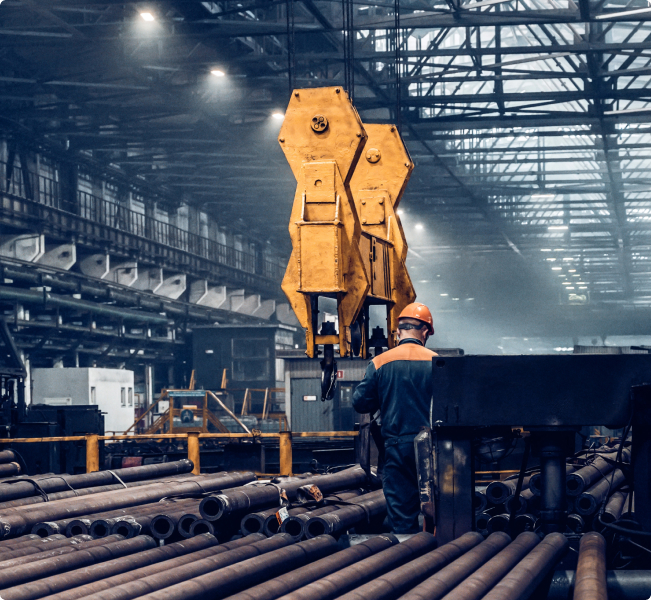
Manufacturing today is driven by automation, traceability, and quality assurance. Every component moving through a production line needs to be identified accurately throughout its lifecycle.
Imagine an automotive manufacturer producing thousands of engine components every day. If one component develops a defect months later, the manufacturer must be able to trace exactly when it was produced, which production batch it belonged to, and even which machine manufactured it.
Laser marking makes this possible.
Because the markings are permanent and highly accurate, manufacturers can identify products throughout manufacturing, warehousing, distribution, and after-sales service.
The same principle applies across industries.
Medical equipment manufacturers use laser marking for compliance and patient safety. Electronics manufacturers mark PCBs and connectors with tiny QR codes. Jewellery manufacturers use laser technology to create BIS hallmarks and custom engravings without affecting the finish of precious metals.
In every case, the goal is the same—create reliable identification that lasts for the life of the product.
How Does a Laser Marking Machine Work?
Although laser marking appears simple from the outside, the technology behind it is highly sophisticated.
A typical Fiber Laser Marking Machine consists of four major components:
- Fiber Laser Source
- Galvanometer (Galvo) Scanner
- F-Theta Lens
- Control Software
The process begins inside the laser source, where a highly concentrated beam of light is generated. This beam is directed through a series of mirrors controlled by a high-speed galvanometer scanner, which rapidly positions the laser across the material.
Finally, the beam passes through an F-Theta lens that focuses it onto an extremely small point on the workpiece.
At this focused point, the laser energy interacts with the material’s surface. Depending on the laser settings and the type of material being processed, the beam may:
- Change the surface colour
- Create controlled oxidation
- Vaporize a microscopic layer
- Produce a shallow engraving
- Generate high-contrast markings
The entire process takes place in milliseconds, allowing manufacturers to mark hundreds or even thousands of parts every shift with remarkable consistency.
Since the laser is controlled digitally, every mark is identical, ensuring excellent repeatability in mass production.
Different Types of Laser Marking
Many people use the terms laser marking, laser engraving, and laser etching interchangeably. While they all use laser technology, they are different processes designed for different applications.
Understanding these differences helps businesses choose the right marking method for their products.
Laser Engraving
Laser engraving removes material from the surface, creating a deeper and more permanent mark.
Because the laser cuts into the material, engraved markings can be felt by touch and remain visible even after painting, coating, or prolonged exposure to harsh environments.
Laser engraving is commonly used for:
- Industrial tools
- Nameplates
- Mould identification
- Heavy engineering components
- Firearm identification
- Permanent asset marking
Laser Etching
Laser etching uses lower laser power than engraving.
Instead of removing significant material, it melts the surface slightly, creating a raised texture and a visible contrast.
Because less material is removed, laser etching is generally faster than engraving and is suitable for high-volume production.
Common applications include:
- Stainless steel parts
- Automotive components
- Consumer electronics
- Industrial equipment
- Metal branding
Laser Annealing
Laser annealing is primarily used on metals such as stainless steel and titanium.
Rather than removing material, the laser heats the surface just enough to create controlled oxidation beneath the surface layer. This changes the colour of the material without affecting its smooth finish.
The biggest advantage of annealing is that the surface remains completely intact, making it ideal for industries where hygiene is essential.
This process is widely used for:
- Medical instruments
- Surgical tools
- Food processing equipment
- Pharmaceutical components
Foaming and Carbon Migration
Certain plastics respond differently when exposed to laser energy.
Some plastics produce light-coloured marks through foaming, while others create dark, high-contrast markings through carbon migration.
These techniques are commonly used for:
- Electrical switches
- Consumer products
- Plastic housings
- Electronic connectors
- Automotive interiors